


Why PureTaboo May Look Blocked From the UK
Adult content sites operating internationally face a growing patchwork of regional rules. In the UK, the Online Safety Act 2023 placed new duties on platforms that host pornographic material, building on earlier attempts under the Digital Economy Act 2017 that were never fully enforced. When a site like PureTaboo detects a UK IP address, it may serve a restricted page, an age-verification prompt, or in some cases a complete block, depending on whether the platform has chosen to comply with Ofcom guidance or withdraw from the UK market entirely.
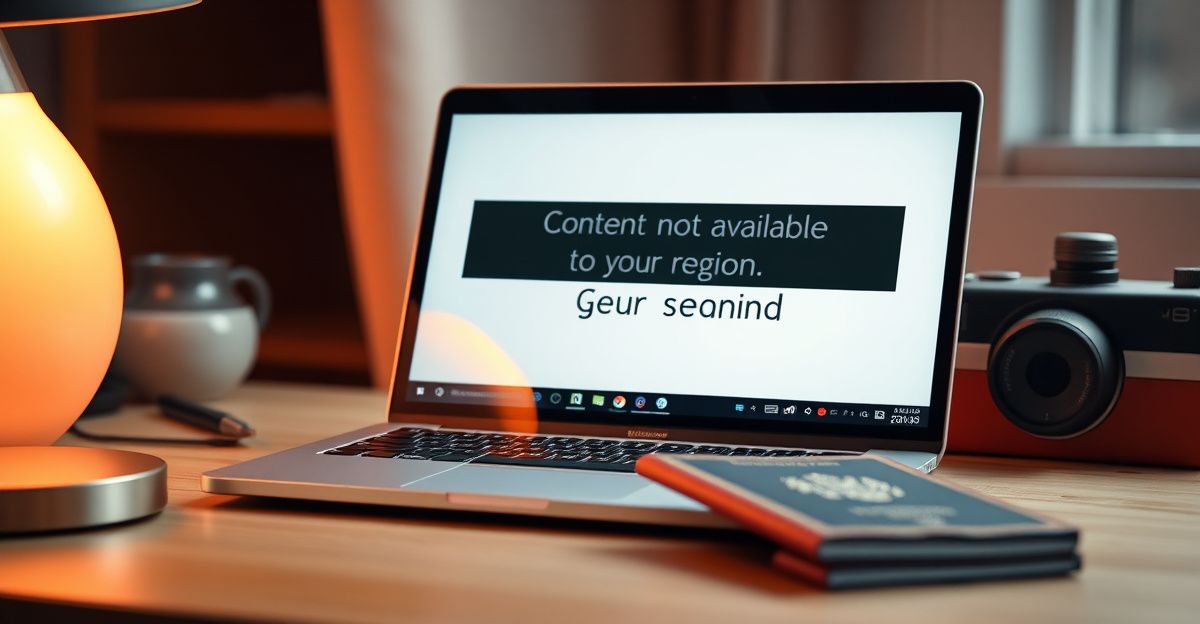
Geo-blocking works by checking your IP address against a geolocation database. Services such as MaxMind map IP ranges to countries with reasonable accuracy, so your broadband or mobile IP is almost always identifiable as British. If the site has decided to block UK traffic, you will see a message such as "Content not available in your region" before any content loads. That is a deliberate business or compliance decision by the platform, not a technical fault on your end. You can read more about how this affects your options on our PureTaboo Ofcom regulation guide.
How VPNs Interact With Geo-Blocking
A VPN routes your connection through a server in another country, replacing your visible IP address with one from that server's location. If you connect through a US or European server, the adult site sees a non-UK IP and may grant access. That is the basic mechanics. In practice, the picture is more complicated.
Many adult platforms now run active VPN detection, cross-referencing IP addresses against known commercial VPN ranges and datacentre blocks. A residential IP from a UK broadband provider looks very different from a datacentre IP owned by a VPN company in Amsterdam. Sites that want to enforce regional rules invest in databases specifically designed to flag VPN exit nodes. You may find that some VPN servers work while others are immediately blocked, and that list changes frequently as platforms update their blocklists.
VPN use is legal in the UK. There is no law banning consumers from using a VPN for privacy or to access content abroad. However, legality does not mean consequence-free: a site's terms of service may prohibit VPN use, and breaching those terms can result in account suspension. It is worth reading any platform's terms before you rely on a workaround as part of your regular routine.
Age Verification: The Real Regulatory Shift
The more significant change for UK users is age verification, not geo-blocking. Ofcom began consulting on age assurance standards in 2023, and the Online Safety Act gave the regulator real enforcement teeth, including fines of up to 10 percent of global turnover for non-compliant services. That is a meaningful number for any platform with substantial UK revenue.
Age verification methods in the adult sector typically fall into a few categories. Credit card checks confirm that the cardholder is likely over 18, since you must be an adult to hold a credit account. Government ID uploads involve submitting a photo of a passport or driving licence, either reviewed manually or processed through an automated service such as Yoti. Some platforms use database checks against public records. Each method has privacy trade-offs, and UK regulators acknowledge that users are reluctant to hand over ID to adult sites.
A VPN does not help you pass age verification. If a site requires you to upload ID or confirm a card, routing your traffic through a different country does not change what documents you can produce. Age verification is applied at the account or session level, not the network level. This is an important distinction that gets glossed over in most VPN marketing. For a deeper look at how these checks apply specifically to this platform, see our guide to PureTaboo UK age verification.
Can UK Police Track VPN Users?
This is one of the most searched questions on the topic, and the honest answer is: it depends on the VPN provider and the circumstances. UK law enforcement can request data from VPN companies under the Investigatory Powers Act 2016. If a VPN provider keeps connection logs, those logs can be disclosed. Many reputable VPN providers operate a verified no-logs policy and are headquartered outside UK jurisdiction, which limits what can be compelled. However, traffic analysis, court orders served in multiple jurisdictions, and cooperation between agencies mean that determined law enforcement can often build a picture even without direct logs. For everyday browsing of legal content, the practical risk is very low. For anything that crosses into illegal territory, a VPN is not reliable protection.
What Happens If a Site Bans VPNs Entirely?
Some platforms go beyond passive detection and actively refuse any connection flagged as a VPN or proxy. This is increasingly common among streaming services and adult platforms trying to enforce regional licensing or compliance obligations. When that happens, your options narrow. You can try a different VPN server or provider with fresher residential IPs, but that is an ongoing cat-and-mouse process that requires effort and often a paid subscription. Free VPN services are nearly always on blocklists within days of launch, since their IP ranges are widely shared and quickly identified.
Setting a consistent routine around which tools you use, and keeping them updated, gives you the best chance of stable access. Treat it like any other part of your digital self-care strategy: a clear plan, regular maintenance, and realistic expectations about what the technology can and cannot do.
Staying Safe and Informed as a UK Viewer
Whatever tools you use, a few consistent habits protect both your privacy and your wellbeing. Use a reputable, paid VPN with a no-logs policy if privacy is your priority. Check whether the site you are accessing has a clear privacy policy and complies with data protection standards. The UK GDPR, which took effect in 2018 alongside the EU version, still applies to any platform processing data about UK residents, regardless of where the platform is hosted.
Be honest with yourself about why you are accessing a site and what boundaries you want to set around that. Adult content consumption is a normal part of many people's lives, but it works best when you approach it with intention rather than impulse. Setting goals around your media habits, just as you might with any other routine, gives you more control and reduces the chance of stumbling into content that does not align with your values. If you want to understand more about whether this platform is a trustworthy place to spend your time, our is PureTaboo safe overview covers what you need to know before committing.
Comments
No comments yet.
Leave a comment
Your email will not be shown. Comments are reviewed before they appear.